封神榜
【园所动态】聚焦自主 共研户外自主游戏——户外自主游戏专题教研活动_我的网站

A |
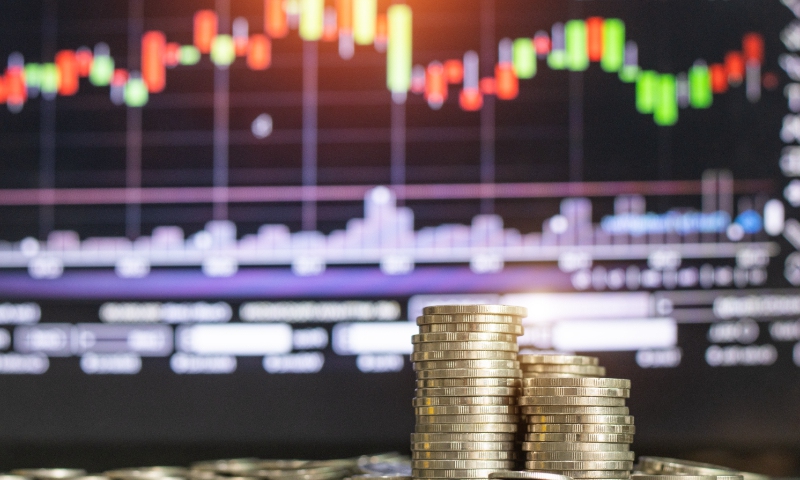
A concept photo of currencies and financial market Illustration: VCG
The designation of Deutsche Bank, a key and influential bank in Europe, to serve as the yuan-clearing bank will greatly facilitate and expand the use of the yuan in the EU market, providing more impetus to broader China-EU economic and trade ties, a Chinese analyst said on Tuesday.
The People's Bank of China (PBC), the central bank, announced on Monday that it had decided to authorize Deutsche Bank to serve as the yuan-clearing bank in Frankfurt, Germany, based on a memorandum of understanding with the Deutsche Bundesbank.
The move came as China-EU trade and economic ties continue to deepen and bilateral trade continues to expand, despite recent restrictions imposed by the European Commission.
In a statement sent to the Global Times on Monday, Deutsche Bank said that following the appointment by the PBC, it will facilitate direct end-to-end processing, clearing and settlement services for cross-border yuan transactions for European financial institutions and businesses, acting as a local bridge to China's payment systems.
Deutsche Bank, a global systemically important bank as well as the world's largest euro-clearing bank, said that it is the first foreign bank in Europe to receive this designation.
"Securing yuan-clearing capability in Europe reinforces our role as a trusted global clearing partner and our long-standing support for yuan internationalization. It strengthens China-Europe financial connectivity and enhances our ability to support clients' cross-border trade and investment flows with greater choice and flexibility," Alexander von zur Muehlen, CEO of Asia Pacific, Europe, Middle East & Africa and Germany at Deutsche Bank, said in the statement.
Xi Junyang, a professor at the Shanghai University of Finance and Economics, told the Global Times on Tuesday that while a number of Chinese banks are already performing yuan-clearing functions in the EU, the addition of Deutsche Bank, with its deep roots in the local market, carries great significance.
"Banks have different client bases, and Deutsche Bank has many European companies as its customers. With the appointment, these market participants enjoy a far greater degree of facilitation and ease in tapping yuan use cases," said the professor.
Companies and financial institutions can also avoid risks of foreign exchange losses as they can now directly choose yuan-euro settlement and bypass the use of a third currency, the expert said, noting that China-EU trade and investment ties will be one step closer with a local clearing bank coming onboard.
Tian Lihui, dean of the Institute of Financial Development at Nankai University, told the Global Times on Tuesday that the latest development, some 12 years after the first-yuan clearing bank form a Chinese bank was set up in Frankfurt, marked a milestone as the yuan-clearing system in Europe has evolved from a model where "Chinese entities handle clearing for Europeans" to one where "Europeans handle yuan-clearing themselves."
The decision by one of Europe's largest domestic banks to integrate into the yuan-clearing system signals that China-Europe financial cooperation is moving beyond the shallow level of facilitating trade settlements into the more substantial level of jointly building financial infrastructure, Tian said.
For both China and Europe, this move represents a mutually beneficial institutional alignment, Tian said. "China gains greater depth in the offshore yuan market, while Europe secures an additional strategic option amid the contest of major currencies."
Brussels has recently been intensifying its use of restrictive trade and regulatory tools across sectors ranging from clean technologies to digital infrastructure and foreign subsidies, with many of these measures seen as directly affecting Chinese firms and adding strain to China-EU economic relations.
However, despite these moves, deepening industrial and supply chain integration and the strong complementarity of the two economies have continued to push bilateral trade to new highs. In the first seven months of 2026, China's total trade with the EU stood at 3.67 trillion yuan ($543.90 billion), up 9.5 percent year-on-year, data from China's General Administration of Customs showed on Friday.
As China-EU economic and trade ties continue to expand and deepen, demand for the yuan to be used in the EU market will rise proportionately, and more EU banks will likely be authorized to serve as yuan-clearing banks, Xi Junyang said.
Financial cooperation between the world's largest trading bloc and the largest trading nation has accelerated in recent months. In May, the PBC renewed and expanded a bilateral currency swap agreement with the National Bank of Serbia, increasing the value of the swap from 1.5 billion yuan to 5 billion yuan.
Almost 80 percent of the surveyed Chinese companies operating in the EU plan to expand their investment, even amid tightening policies in the EU and an increasingly complex business environment, according to a report published by the Chinese Chamber of Commerce to the EU and the China Economic Information Service in March. Fostering cooperation in emerging industries and cross-border finance have been highlighted by industry insiders as new growth drivers of China-EU trade and economic cooperation.
The yuan accounted for 3.1 percent of global payments in June, rising from 2.75 percent in the previous month, and ranking as the fifth most active currency for global payments by value, according to a report from the Society for Worldwide Interbank Financial Telecommunication. In terms of trade finance, the yuan ranked second with a market share of 8 percent.
。 —— 户外自主游戏教研活动 ——
聚焦自主
共研户外自主游戏
游戏是孩子的天性,而自主游戏则是他们探索世界、学习成长的最佳途径。
——玛丽亚·蒙特梭利
户外活动是幼儿在自然广阔的环境中,根据个人喜好和需求自主选择、自主探究、自主表现的一种活动。

B | 它不仅能满足幼儿锻炼身体和认识世界的需求,还能激发他们的好奇心和求知欲。

C | 随着“深度学习”理念的深入,我们开始思考:如何在户外活动中推动幼儿的深度学习?以达到深度学习的目的呢?12月13日,我园组织开展了“聚焦户外自主游戏 引导幼儿深度学习”——户外自主游戏专题教研活动。
教研一:游戏体验,追随幼儿
为了更好的体验游戏的乐趣,老师们化身成“孩子”,选择幼儿园最常见的材料,全体老师一起乐运动,气氛顿时活跃了起来。

D | 大家分组行动,参与到游戏中,在轻松愉快的氛围中,不仅感受到了游戏的乐趣,更深刻体会到了孩子们在游戏中的需求和感受。
教研二:现状分析,交流准备
户外自主游戏不仅能让孩子们亲近自然,锻炼身体,还能培养他们的社交能力、创新思维和解决问题的能力。保教主任向笑老师从户外自主游戏的价值、幼儿深度学习的表现与特征等方面带领大家针对户外自主游戏进行了初步共学交流。

E |
教研三:分组研讨,思维碰撞
在初步的共学交流结束后,老师们围绕游戏案例:《小小外卖员》、《巴巴警局》、《轨道变变变》进行分组观察、讨论。各小组分别从“游戏环境、游戏材料、幼儿知识经验、教师指导”四方面进行讨论交流。

F |
分组研讨
各组分享
教研四:总结提升,学以致用
针对老师们的交流和分享,向笑老师对老师们的研讨进行梳理,并从现阶段园所户外自主游戏开展存在的问题和需改进之处等方面进行深度剖析,进一步理清了组织开展自主游戏的思路。希望老师们能以此教研为契机,关注幼儿自主游戏、引导幼儿深度学习。老师们在活动后,也将本次教研心得体会整理总结出来,收获满满。
本次户外自主游戏教研活动,为老师们提供了一个交流平台,使老师们对幼儿户外自主游戏的支持策略有了更深入的认识和理解。在今后的工作,我们将继续加强幼儿户外自主游戏的研究和实践,探索更多有效的支持策略,以促进幼儿游戏水平的提高和综合素质的发展。
编辑:舒彤
审核:向笑
审批|李思思
审核|陈铃淋。
Current article:http://npqn.diuhuairandaikaomangshangnen.buzz/ea1u/cph6ecs.html
Published on:12:48:01